Asymmetry

ISSN: 3006-2950 (Print)

ISSN: 3006-2969 (Online)

CODEN: ASYMAJ

About This Journal
Special Issues
View more
Advances in Asymmetric Catalysis: From Mechanisms to Applications
Special Issue Editor:   Mario Waser, Shengcai Zheng
Submission Deadline:  10 October 2026
Latest Articles
View more
Matching of perturbative and exponentiated initial state radiation corrections to e+e-annihilation
Andrej Arbuzov,Uliana Voznaya
Article18 Aug 2026OPEN ACCESS

The behavior of higher-order radiative corrections due to initial state radiation in processes of electron-positron annihilation is analyzed. Numerical results for energies of future colliders are presented. Uncertainties of the known results on these corrections are estimated. A modified scheme for simultaneous exponentiation of pure photonic and non-singlet pair corrections is presented. Matching of the exponentiated results with the existing analytic higher-order calculations is constructed. A new subtraction scheme is suggested. The results obtained are important for increasing the relative accuracy of the theoretical description of processes that will be studied in future electron-positron colliders to a level of approximately 10-5.

PDF
Validating apparent violations of Onsager reciprocity in charged membrane models
Elijah Lator
Perspective29 Jul 2026OPEN ACCESS

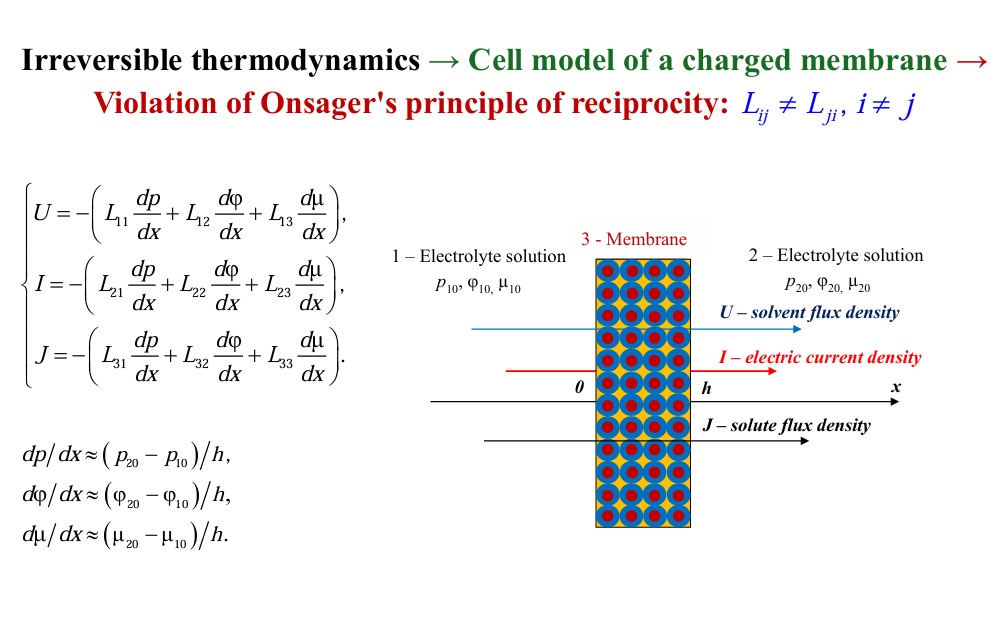
Apparent violations of Onsager reciprocity continue to be reported in models of transport through charged membranes and concentrated electrolytes, with asymmetric cross-coefficients frequently interpreted as evidence of broken microscopic reversibility. We develop a thermodynamic framework that clarifies when such asymmetries represent genuine non-reciprocal behaviour and when they are artefacts of modelling and data reduction. Using a charged-membrane cell model as a case study, we formulate entropy production in terms of conjugate flux–force pairs, construct the full symmetric Onsager matrix, and then analyse how variable reduction, spatial averaging, and concentration-dependent parameterisation affect the resulting reduced kinetic coefficients. Numerical reconstructions of published cross-coefficients, together with controlled examples based on explicitly symmetric Onsager matrices, show that nonlinear, concentration-dependent reductions can generate pronounced and systematically ordered separations between effective coefficients, even when the underlying phenomenological matrix remains exactly symmetric. We further distinguish equilibrium linear-response coefficients from finite-amplitude, steady-state effective parameters and discuss the impact of temporal memory effects in concentrated electrolytes. Taken together, these results demonstrate that the reported asymmetries in charged-membrane models do not constitute a violation of Onsager reciprocity and provide practical criteria for testing reciprocity claims in complex coupled transport systems.

PDF
Advances in asymmetric catalysis: from mechanisms to applications
Kazuaki Ishihara
Editorial24 Jun 2026OPEN ACCESS

I am delighted to see the launch of this Special Issue, “Advances in Asymmetric Catalysis: From Mechanisms to Applications”, edited by Guest Editors Mario Waser and Shengcai Zheng. Having had the opportunity to propose the theme of this Special Issue, I am especially pleased to see it come to fruition. The synthesis of chiral compounds in high optical purity is critically important in medicinal and agrochemical chemistry. K. Barry Sharpless, Ryoji Noyori, and William S. Knowles were awarded the 2001 Nobel Prize in Chemistry for their pioneering contributions to asymmetric oxidation and asymmetric reduction catalysis. These transformations have been primarily achieved using transition-metal catalysts based on elements such as titanium, ruthenium, and rhodium. Subsequently, a wide variety of asymmetric carbon–carbon bond-forming reactions employing chiral Lewis acid and chiral Lewis base catalysts were developed, leading to remarkable advances in asymmetric catalysis.

PDF
Top Downloaded
View more
On uneven ground: embracing the challenges of inter-limb asymmetries and their assessment
José Afonso,Adam Virgile,Javier Peña,Matthew Jordan,Antonio García-de-Alcaraz,Mário Sá,Chris Bishop
Article20 May 2025OPEN ACCESS
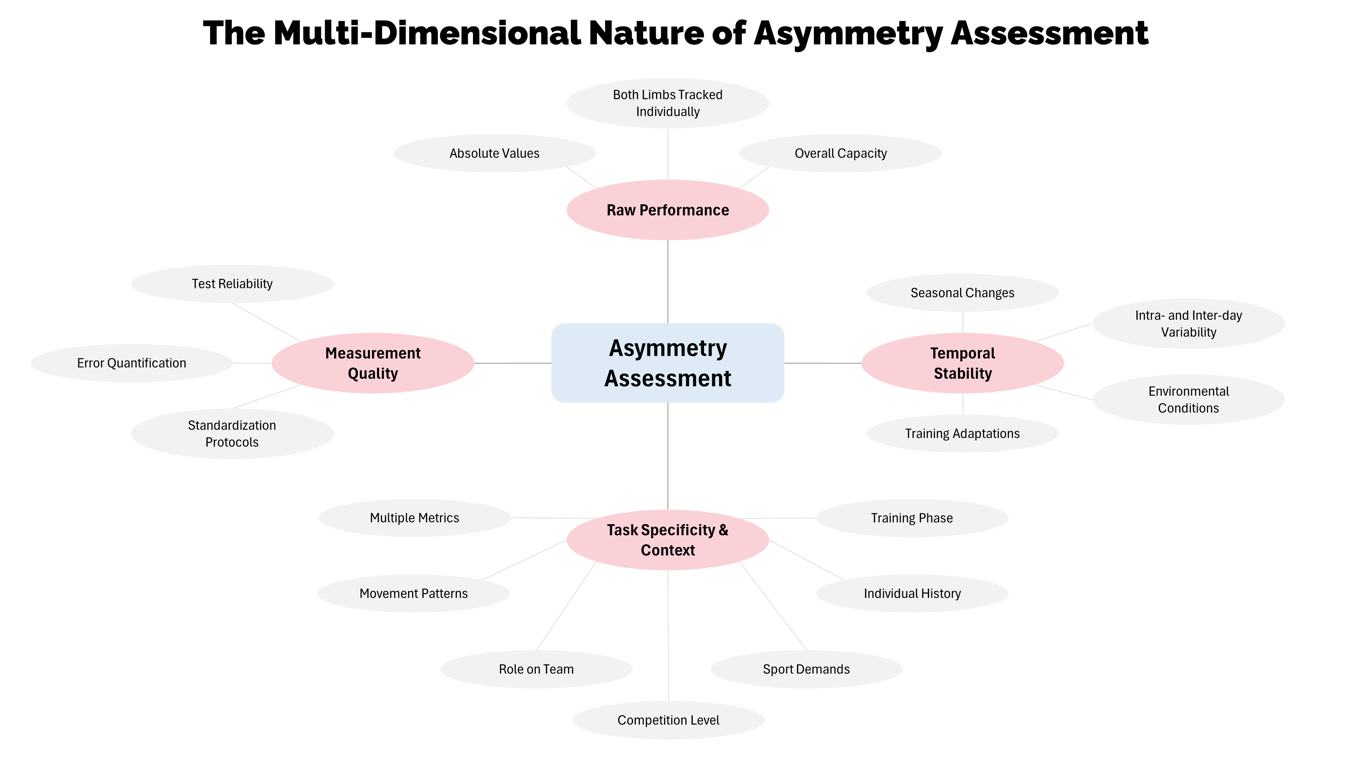
Inter-limb asymmetry is often misunderstood in sports and healthcare, with natural differences seen as problems usually needing correction. Evidence linking inter-limb asymmetries to increased injury risk or reduced performance is weak, and asymmetries of 5–15% (or even higher) typically do not increase the likelihood of injury. Assessing inter-limb asymmetries is a complex matter. Practitioners should select tests aligned with sports demands and track changes over time, rather than relying on single time point data. Ongoing temporal assessments help distinguish meaningful trends from natural fluctuations. Measurement error should also be considered to ensure changes exceed the minimal detectable change and reflect genuine performance or shifts in injury risk. Intra-individual analysis is recommended over averages across groups, as they can obscure meaningful variations. Arbitrary thresholds for what may be considered “normal” asymmetries oversimplify a continuous variable, potentially leading to misleading conclusions. Focusing on ranges (e.g., confidence intervals) instead of point values (e.g., mean) provides a more nuanced view. In addition, interpreting raw limb data alongside asymmetry metrics is crucial, as similar asymmetry percentages may arise from different limb strength profiles. Tracking raw data ensures that interventions improve performance, even if asymmetries persist. We provide a framework to help guide practitioners’ decisions. Task specificity and context, temporal stability, measurement quality, and raw performance data are key pieces of the puzzle. Before implementing “asymmetry-correcting” programs, practitioners should answer key questions, for which we provide a user-friendly decision tree. Not all asymmetries are likely to yield meaningful benefits if corrected, and intervening in asymmetry should result from a carefully reasoned process that requires establishing relevance, ensuring measurement quality, gathering appropriate data, and considering practical implications.
PDF
Asymmetry of cross kinetic coefficients in the cell model of a charged membrane
Anatoly Filippov
Article11 Apr 2025OPEN ACCESS
Theoretical study was performed earlier for the cell model of a charged porous membrane based on Onsager’s approach and the result was calculation of all electrokinetic coefficients. Experimental dependences of electroosmotic permeability, conductivity, and diffusion permeability of some perfluorinated membranes on electrolyte concentration were simultaneously and quantitatively described using exact analytical formulae based on the same set of physicochemical and geometrical parameters. It is shown here that for the developed cell model of the ion–exchange membrane, the Onsager principle of reciprocity is violated—the coupled cross kinetic coefficients are not equal. The violation is associated with the fact that the reciprocity principle takes place only for systems for which generalized fluxes are zero at thermodynamic forces other than zero within the framework of linear thermodynamics of irreversible processes.
PDF
A new mathematical strategy for creating asymmetric continuous distributions
Christophe Chesneau
Article19 Sep 2024OPEN ACCESS
In this article, we present a new mathematical strategy for creating flexible asymmetric continuous distributions. It is designed to introduce asymmetry into any distribution with the entire real line as support, thanks to the tuning of two parameters and an intermediate function. A wide range of intermediate functions of different types can be chosen, including a high degree of adaptability. To illustrate this strategy, we present four types of asymmetric normal distributions and four types of asymmetric Cauchy distributions. Some of them have rare properties, such as multimodality (bimodality, trimodality, and more) and abrupt angular shape for the corresponding probability density functions. These features are supported by an extensive graphical analysis. Finally, we discuss the adaptation of the strategy for distributions with different support.
PDF